




















H o w W e s A n d e r s o n M a k e s M o v i e s

HOUSTON, TEXAS

Born there in 1969, the middle of three brothers. He wanted to be an architect before he wanted to make films, and it shows. Every one of his sets is still drawn like a building first, a story second. He met Owen Wilson in a playwriting class at the University of Texas, and the two of them wrote his first film, Bottle Rocket, together, based on a short film they’d already made about a group of friends who rob a bookstore. Nearly thirty years later, he still writes with a friend, not a room of them.
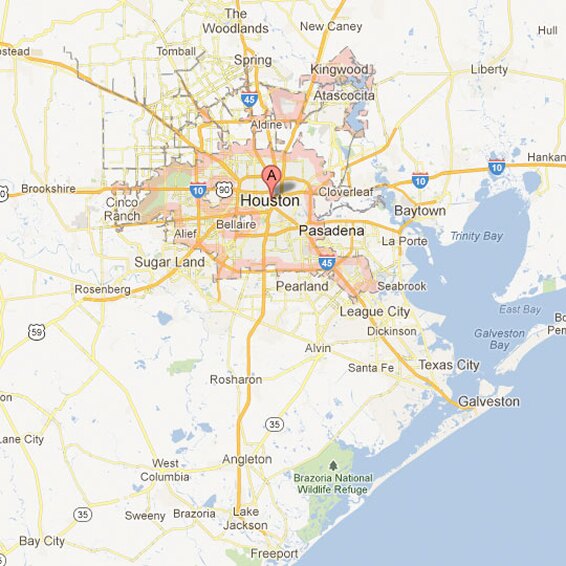
Map of Houston and the surrounding Texas Gulf Coast, with Houston marked

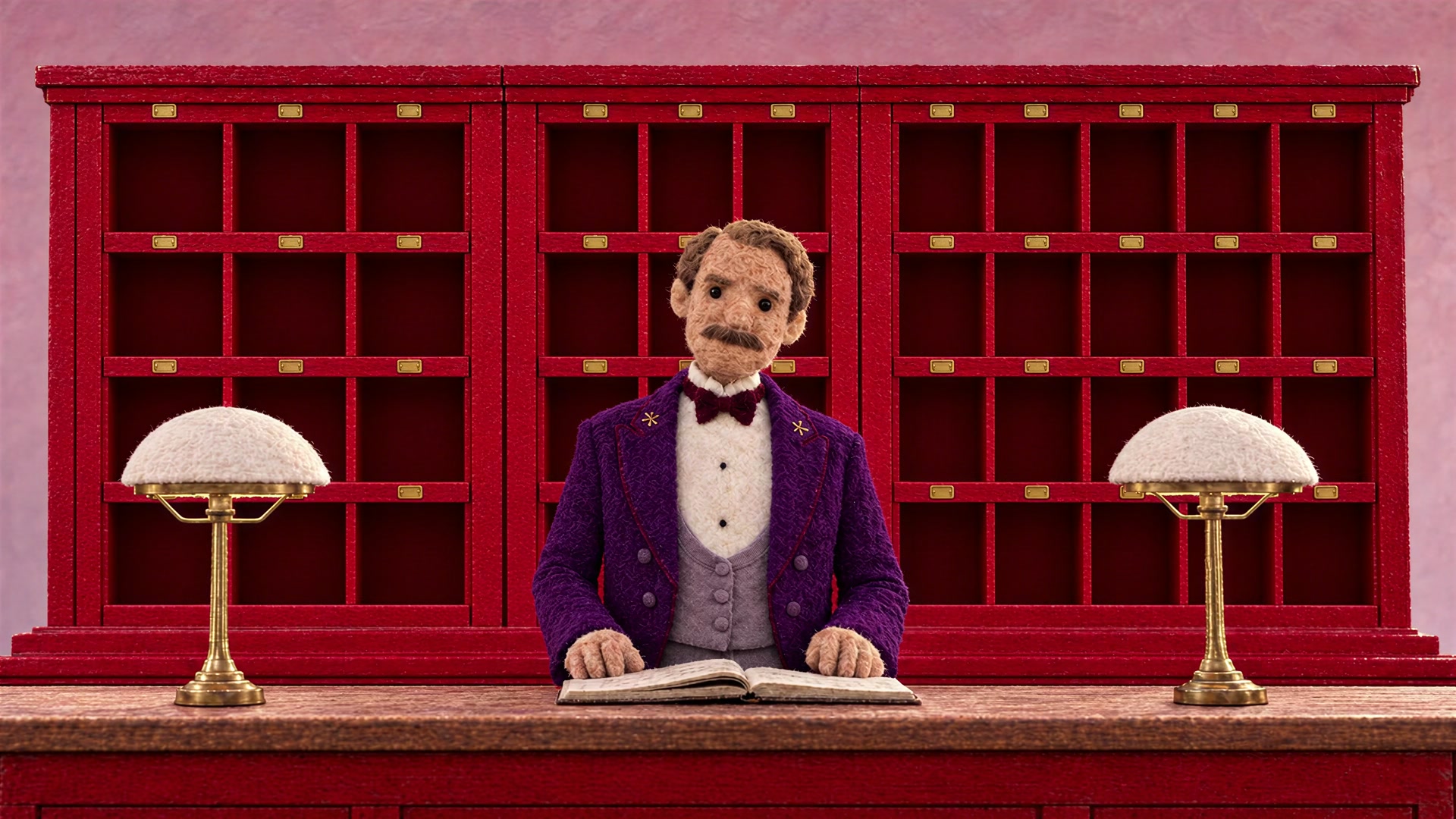
The concierge at his desk, from The Grand Budapest Hotel

Symmetry

Wes Anderson treats the camera lens like a perfectly calibrated ruler, anchoring his frames with intense planar symmetry. Characters stand in the center of the screen, flanked by matched set pieces and deliberate architectural lines, turning scenes into living dioramas that feel both playful and controlled.

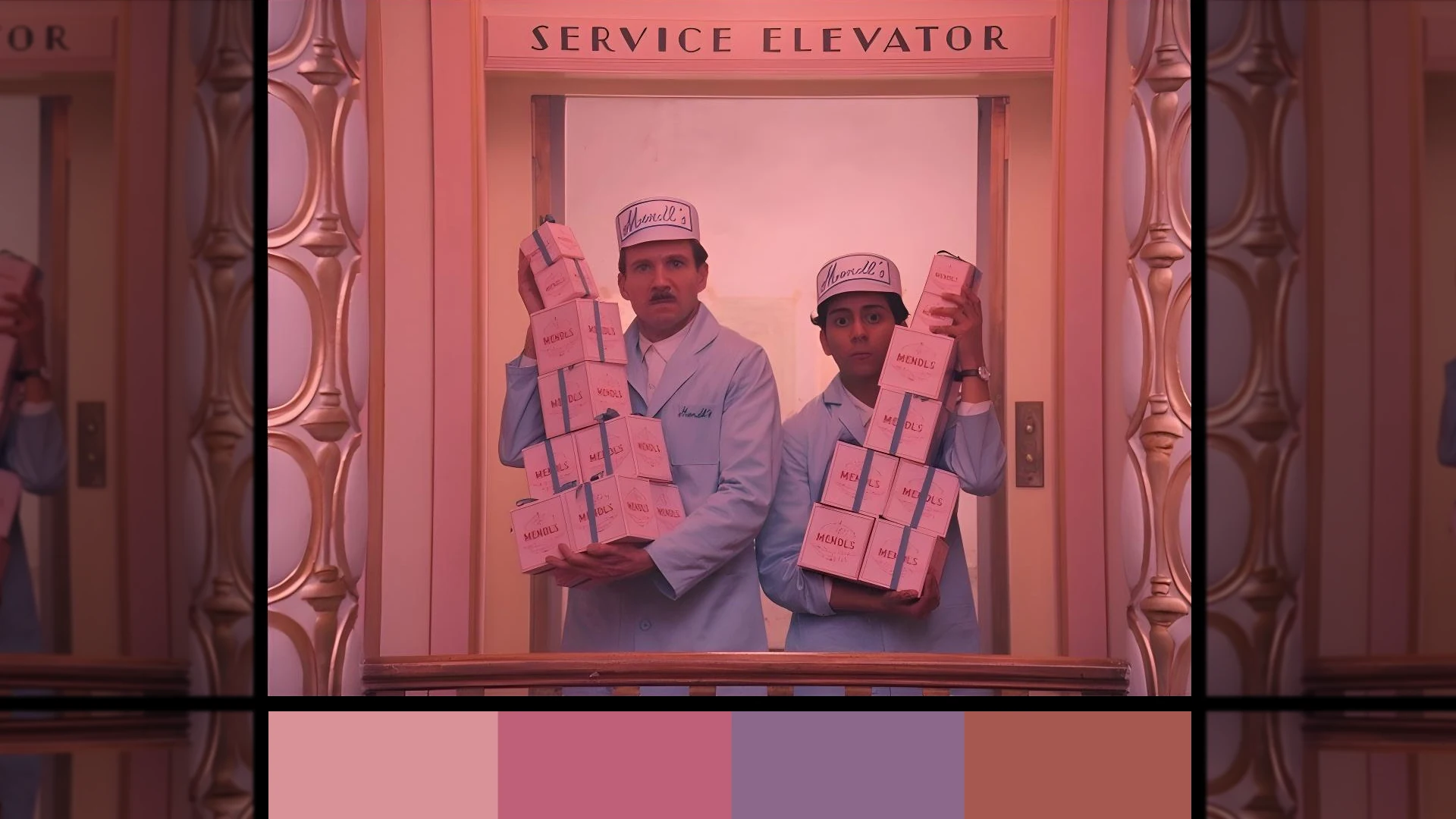
A still from The Grand Budapest Hotel in dusty pinks and mauves, with its colour palette shown beneath

Color

Wes Anderson paints his worlds with hyper-curated color palettes that dictate the emotional tone of every scene. Saturated pastels, bold primary accents, and monochromatic schemes make his sets feel like hand-crafted storybooks, wrapping adult anxieties inside a deceptively cheerful visual wrapper.

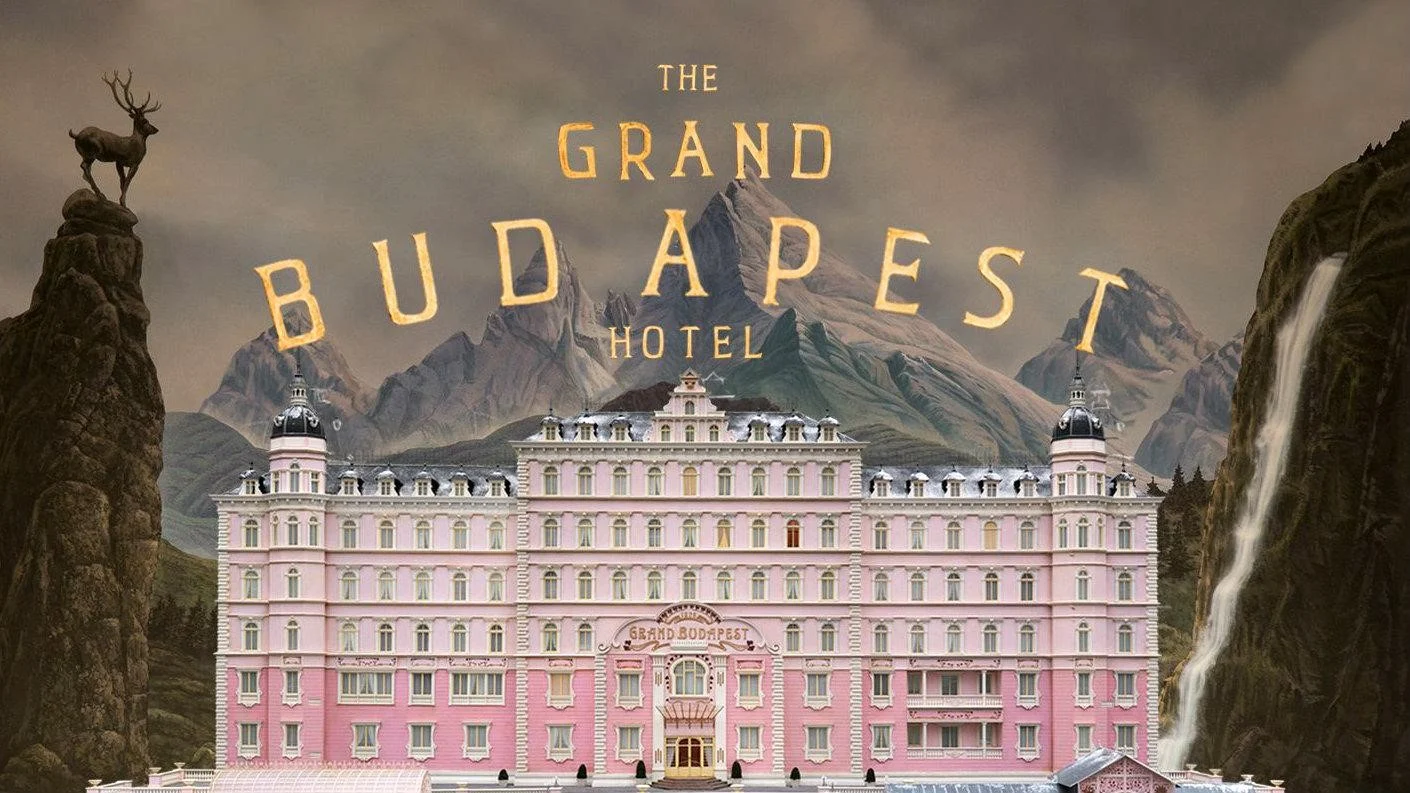
The Grand Budapest Hotel title card, its gold lettering set across the mountains above the hotel

Typography

Wes Anderson treats typography as a central character, using bold, centered lettering to anchor his storybook aesthetic. Chapter titles and book covers in Futura or retro scripts are framed with the same geometric precision as the actors, as if each film were a vintage document being read aloud.